When parents first hear that we don’t push RCM grades or enter students in competitions, they usually have one of two reactions. Either they’re relieved — because they’ve seen what exam pressure does to a kid who just wanted to play — or they’re skeptical, wondering if we’re cutting corners.
We’re not cutting corners. We made a deliberate choice. Here’s why.
Grades Make You Better at Copying Music — Not at Playing It
This is the part that doesn’t get said enough in music education circles, so we’ll say it plainly: RCM-style grade exams measure how accurately you can reproduce a piece of music exactly as written on a page. That’s a skill. It’s not a small skill. But it’s a narrow one.
What grades don’t measure — and don’t develop — is your ear, your feel, your ability to play with other people, your instinct for when to hold a note longer or hit a chord harder because the moment calls for it. They don’t measure whether you actually love playing.
We’ve seen students pass Grade 8 RCM who can’t jam with a friend, can’t play a song by ear, and freeze the moment someone takes the sheet music away. Technically accomplished. Musically limited.
That’s not the outcome we’re building toward.
Theory on Your Instrument Beats General Theory Every Time
Music theory matters. We teach it. But there’s a significant difference between learning theory in the abstract — scales, intervals, time signatures on paper — and understanding it through your instrument.
When a guitar student learns why a chord progression sounds the way it does by feeling it under their fingers, it sticks differently than reading about it in a workbook. When a piano student discovers that the tension in a diminished chord resolves naturally by just playing it and listening, that’s a moment of real musical understanding — not memorization.
Grade-focused teaching tends to run theory through a standardized curriculum on a standardized timeline, regardless of whether it connects to what the student is actually playing. We run it the other way: theory comes in when it explains something the student is already experiencing on their instrument. It lands because it’s relevant, not because it’s next on the list.
Competitions Aren’t Necessarily Bad — But They’re Not Neutral Either
We want to be honest here: competitions aren’t evil. They build focus, discipline, and the ability to perform under pressure. For the right student with the right temperament, they can be genuinely valuable.
But here’s the thing nobody talks about: the grader’s bias is real.
Music adjudication is subjective. Two equally accomplished students can walk out of the same competition with wildly different results depending on who’s sitting at the judging table that day — their training, their preferences, their aesthetic. A judge who grew up in a particular tradition will hear a performance through that lens. That’s not corruption, it’s human. But it means the result is not the objective measure of your child’s ability that it appears to be.
When a kid trains for months, performs their best, and loses — and the loss comes down to one person’s taste more than any real deficiency in their playing — the lesson they take away isn’t always “I need to work harder.” Sometimes it’s “I’m not good enough.” That’s a lesson we’d rather they never learn from music.
What We Do Instead
Our students still have structure, clear goals, and weekly progress. We track everything through our studio management system and teachers set specific objectives every lesson. Progress is real — it’s just measured against the student themselves, not a standardized rubric.
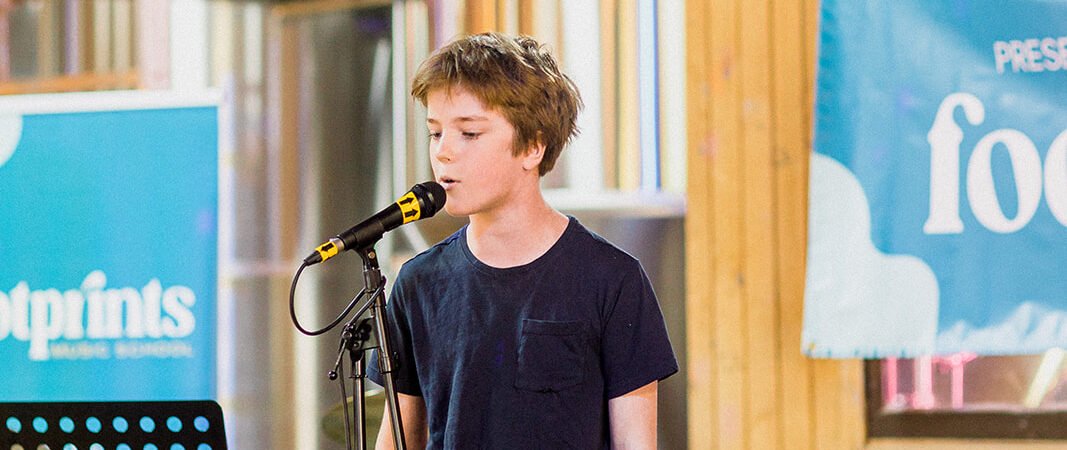
We also offer two optional showcases a year at Shawn & Ed’s, a space we’ve partnered with for years because it creates exactly the right atmosphere — relaxed, welcoming, low stakes. Students who want to perform have a genuinely supportive room to do it in. Students who aren’t ready, or who simply don’t want to, don’t have to. No pressure, no explanation required.
The goal is simple: we want your child to still be playing music at 25, at 40, at 65. Not because they passed a test, but because it means something to them.
That’s what we’re building. One lesson at a time.
Footprints Music offers piano, guitar, voice, drums, and ukulele lessons in Hamilton for kids, teens, and adults. Learn more about our approach →