
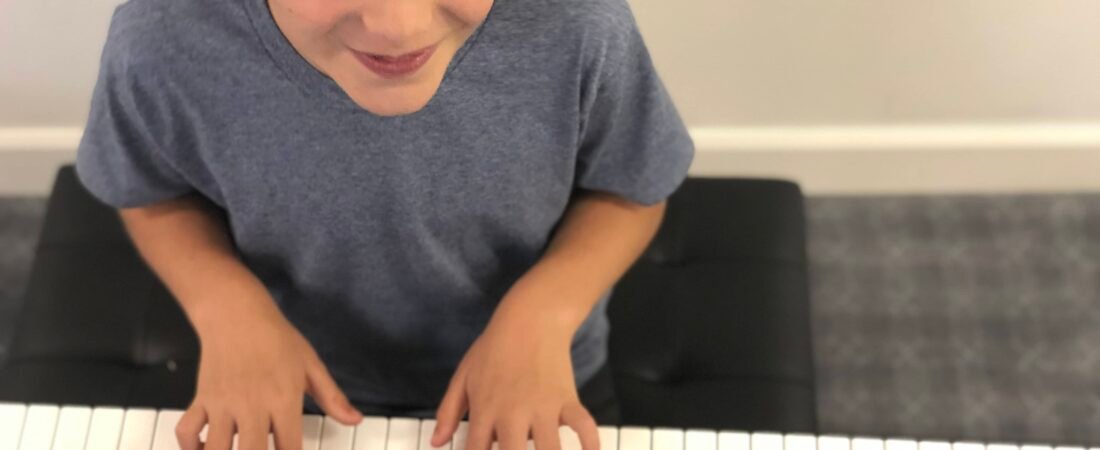
When we first opened, a parent asked if her 4-year-old was ready for guitar lessons. My honest answer was no — I told her 6 was probably the better age to start.
She pushed back. Politely, but firmly. She knew her kid.
So we tried it. That student took lessons with us for over five years.
I’ve thought about that conversation a lot since. Not because I was wrong about 4-year-olds in general — the caveats are real and I’ll get to them — but because it reminded me that readiness isn’t really about age. It’s about the child in front of you.
Here’s what 16 years of teaching kids in Toronto and Hamilton has actually taught us.
The Honest Answer: Most Kids Are Ready Between 5 and 7
This is the range where the stars tend to align — attention span, fine motor skills, and genuine interest are usually developed enough that lessons stick and progress feels real to the child.
But “most kids” isn’t “your kid.” So let’s go deeper.
Can a 4-Year-Old Take Music Lessons?
Yes — with one non-negotiable condition: they need to be able to focus on the class and the instrument for the duration of the lesson.
Piano and drums tend to work well at 4. Piano because early wins come quickly and both hands are visible — there’s no complicated physical setup. Drums because the full-body, physical nature of it matches how young kids naturally engage with music.
Guitar, ukulele, and voice at 4 are trickier — not impossible, but more dependent on the individual child. Hand size, finger strength, and vocal cord development are all real factors. We don’t apply a hard rule either way. We look at the child in front of us.
What we look for in a 4-year-old:
- Can they follow a simple two-step instruction?
- Do they respond to music physically — moving, tapping, singing along at home?
- Is the interest coming from them, or entirely from you?
That last one matters more than parents expect. A 4-year-old who asks to play music is a completely different student than a 4-year-old whose parent wants them to play music. Both can succeed — but one needs a lot more patience and a very specific kind of teacher.
What About 6? Is That the Sweet Spot?
It’s a strong age for most kids — but as I learned, telling a parent their child has to wait two years based on age alone is lazy advice. It ignores the actual child.
Six-year-olds generally have better fine motor control, longer attention spans, and can understand basic cause and effect in learning (“if I practice this part, it gets easier”). That makes the teacher’s job more straightforward. But a focused, curious, music-loving 4-year-old will outperform a reluctant 7-year-old every single time.
Does the Instrument Matter?
Significantly. Here’s the breakdown from what we’ve seen:
Piano: Most forgiving for young beginners. We regularly start kids at 4 with good results when the focus is there.
Drums: Naturally engaging for young kids — rhythm is intuitive in a way that note-reading isn’t. Another strong option at 4.
Guitar and Ukulele: Hand size and finger strength are real constraints at 4 or 5. More realistic at 7 or 8 for most kids, though we evaluate each student individually.
Voice: We recommend waiting until 8 or older to protect developing vocal cords. Young kids can absolutely sing — we just won’t push them through exercises that could cause strain.
What Happens If You Start Too Early?
Usually nothing catastrophic — but often nothing great either. Kids who start before they’re emotionally ready tend to plateau around age 7 or 8. They’ve been “doing music” for a couple of years but haven’t built much real skill, and now they’re aware enough to notice. That gap between effort and result is discouraging.
Starting at 4 with the right teacher, the right instrument, and a child who can genuinely engage? Totally fine — we’ve seen it work beautifully. Starting at 4 because you’re worried your child will fall behind other kids? That’s the wrong reason, and it usually shows up in the lessons.
The Question Worth Asking Instead
Rather than “what age should my child start?”, ask yourself: does my child ask to listen to music at home? Do they respond to it — dancing, tapping, humming along? Do they show curiosity about instruments when they see them?
If yes to most of those, they’re probably ready — whatever the number on their birthday cake says.
If music is entirely your idea right now, wait a few months and ask again. The lessons will go better, and so will the practice conversations at home.
The best way to find out is a trial lesson. Thirty minutes tells you more than any article can — including this one.
Footprints Music teaches piano, guitar, voice, drums, and ukulele in Hamilton for students ages 4 and up. Learn more about what we teach →